Hi everyone! As the title suggests, I’m back with another couple of beginner-friendly recipes from Indian cuisine. This time, the added bonus is that they’re both naturally gluten-free (for you L 😀 ) and vegan recipes. I hope you enjoy them. 🙂
Poha
The first recipe is a delicious breakfast recipe popular in western and central India. It is made with flattened rice (called poha/paua), onion and potatoes and includes seasoning ingredients like some mild spices, curry leaves, peanuts and coriander/cilantro. While poha is a popular breakfast recipe, it’s perfectly acceptable to eat it for a mid-day snack or even for dinner (desperate times, you know!).

Here are the ingredients you’ll need:
- 2 cups Flattened rice (either from an indo-asian store or Walmart)
- 2 tbsp cooking oil
- 1-2 tsp peanuts (optional)
- 1/2 tsp mustard seeds
- 1/2 tsp cumin seeds (optional)
- 5-6 curry leaves (don’t miss this!)
- 1 green chilli
- 1/2 cup onions (diced)
- 1/2 cup potatoes (diced)
- 1/2 tsp turmeric powder
- Salt (to taste)
- Sugar (a pinch)
- 1 tbsp lemon or lime juice
- 1 tbsp coriander (for garnishing)
- 1 tbsp pomegranate seeds (optional)
Steps:
- Before you begin the actual cooking, let’s make sure that you’ll get a fluffy texture for your poha at the end. The best way to make this happen is to (1) use medium-thick poha for this recipe and (2) rinse your poha with water and let it sit in a colander on the side while you prep other things.
- I’m unsure if this is a popular practice, but I also like to season my poha right at this stage and let them marinate for a few minutes before I toss them in the pan. I find it easier to mix the poha with the rest of my ingredients if they’re already evenly coated with the required seasoning.
- As for the seasoning- I use ~75% of salt and turmeric noted in the ingredients for the poha and a pinch of sugar. Mix the poha well so each grain is well-coated. Now cover it and keep it aside.
- Now that that’s out of the way, let’s begin. Heat some cooking oil in a pan and add some peanuts. Saute them well for a couple of minutes and take them out for later use. Obviously, feel free to skip this step if you dislike peanuts and/or are allergic to them.
- Now, add the cumin and mustard seeds, curry leaves and green chilli into the pan. Wait until you hear the curry leaves splutter and then add your onions. Saute them for a couple of minutes until they turn translucent.
- Add in the diced potatoes and saute them nicely. Now cover the pan and let the potatoes cook on a medium flame for 2-3 minutes. You’ll want the potatoes to be well-cooked before the next step.
- Now, add the remaining salt and turmeric to the pan before mixing in your poha.
- Mix the poha with the rest of your ingredients and cook them well at low flame for another 1-2 minutes. Remember to cook it on a low flame to prevent the poha from sticking to the bottom of your pan.
- Now turn off the stove and add the lime/lemon juice.
- Garnish your dish with some coriander, pomegranate seeds, and sev (if you have it). Simple and filling ‘bataka poha‘.
I must mention that traditionally poha is paired with Indian masala chai, so if you have that option available, you must give it a shot at least once haha!
vegetable pulao (an Indian fried rice)
This second recipe is probably my most preferred one-pot dinner recipe. All you need is some rice (people often choose basmati, but any kind is fine I guess), any vegetables of your liking and a few spices.
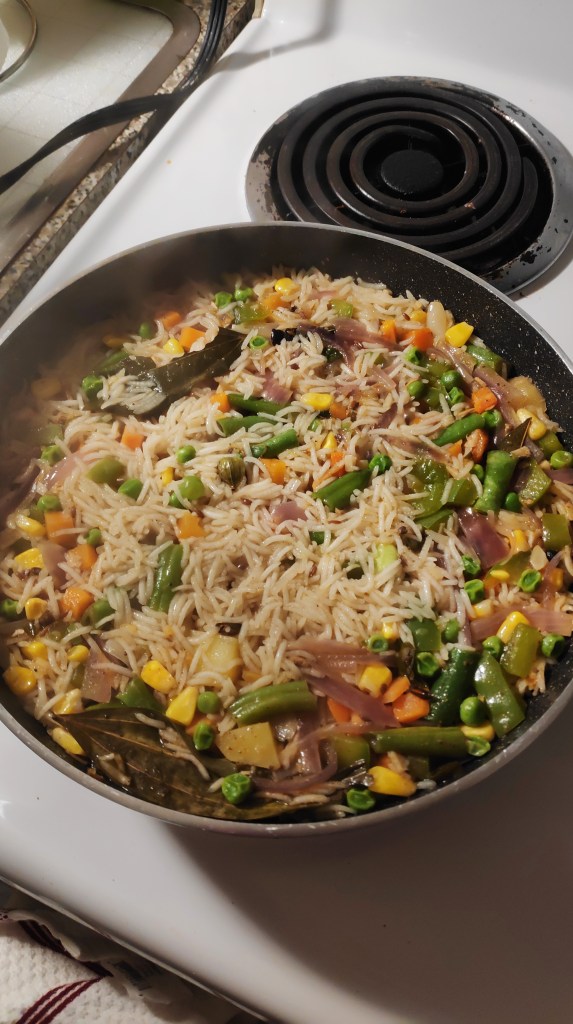
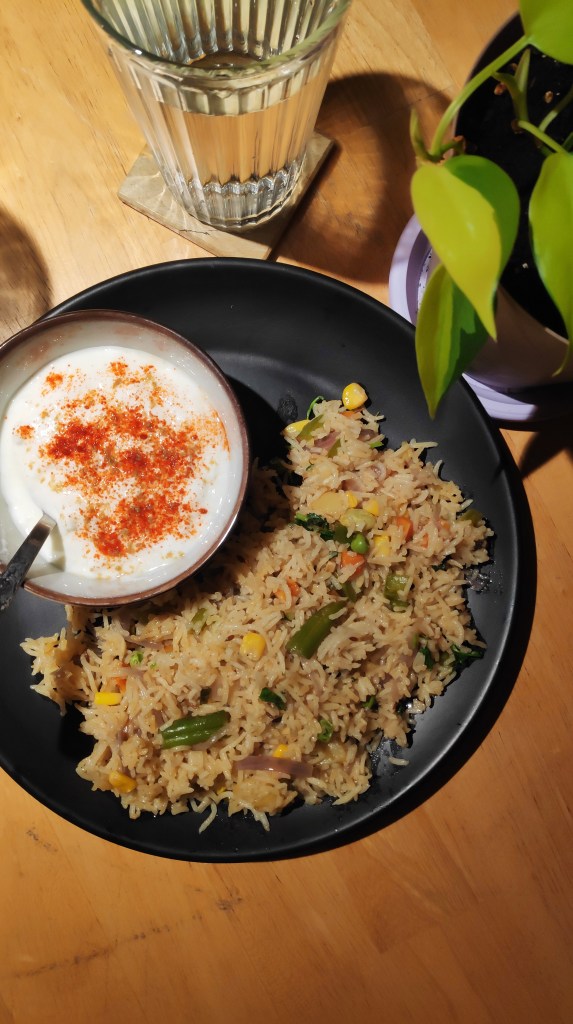
Here are the ingredients:
- 1 cup rice (rinsed!)
- 1 tbsp Ghee or oil
- 1 green chilli
- 1 clove of garlic (minced)
- 1/2 tbsp ginger (minced)
- 1/2 cup onion (sliced)
- 1/2 cup tomato (diced)
- 1 small potato (diced into small pieces)
- 1.5 cups mixed veggies (carrots, beans, peas, corn- frozen is fine too)
- 1.5 cup water
- 1 tsp cumin seeds
- 1 bay leaf
- 1 stick of cinnamon
- 1-2 cardamom
- 2-3 cloves (optional)
- 1/2 tsp black pepper
- 1/2 tsp red chilli powder
- 1/2 tsp garam masala
- salt per taste
Steps:
- Rinse your rice with water thoroughly and let it soak in some clean water until you need it.
- Heat some oil or ghee (this isn’t vegan) if you have it in a pan and add all your whole spices like cumin seeds, bay leaf, cinnamon, cloves, cardamom etc.
- Once they turn aromatic, add in your green chilli, garlic and ginger. Saute the ingredients well for a minute or so. (for a less spicy version, add the green chilli later)
- Now add in your onions and saute them until they turn translucent.
- Next, add in your potatoes and tomatoes. Let them cook for a minute or two.
- Now, once the tomatoes have softened a little, add in the rest of your vegetables.
- Next, add the other spice ingredients such as salt, black pepper, chilli powder and of course, don’t forget a pinch of garam masala. Once again, to keep it less spicy, add only a small amount of garam masala. Saute everything well.
- Now mix in the soaked rice with everything else so that even the rice is well-coated with all the spices you added.
- Now add some water to the pan, give everything a good stir and cover the pan with a lid. Let the rice cook on low-medium heat until all the access water evaporates.
- And there you have it! Veg Pulao is ready. Turn off the stove, and fluff the rice gently. You can garnish it with some coriander if you like.
I like to pair veg pulao with some plain yoghurt but one can also pair it with other curries or eat it as is.
So, these are the recipes I personally cook pretty regularly. But, as some of you might know, Indian cuisine is quite famous for being naturally gluten-free. If you’d like to explore more such recipes, I highly recommend checking out this blog from Piping Pot Curry.
Until next time!


 To the Moon and Beyond